

In practice, choosing a crane doesn't start with the name of the machine, but with the project: what weight has to be lifted, to what height, at what radius, on what ground and for how long.
This guide brings together the most commonly used crane types, the differences between them and the criteria that actually matter when you have to make a choice. The goal is to help you quickly narrow down the options before requesting a quote.
For most jobs in Constanța, the choice usually comes down to three relevant families: truck-mounted cranes, mobile all-terrain cranes and, for large, long-term projects, fixed cranes such as the tower crane.
Infographic
Crane types at a glance
An overview of the main crane types and their uses, helpful when you want to get your bearings quickly before going into detail.
How to choose
Mobile or fixed, and what to check first
The first useful split is between mobile and fixed cranes. Once you've settled on the family, five practical criteria help you narrow the choice down to the right model.
Mobile cranes
These are the right choice when you need mobility, quick setup and work across several job sites.
- They are set up quickly and can be moved easily between jobs.
- They suit short or medium-length projects.
- They work well when access and logistics need to be sorted out fast.
Fixed cranes
These are better suited to long, repetitive projects or to sites where height and a steady pace matter more than mobility.
- They require more careful setup and planning.
- They are efficient on large, tall sites.
- They deliver good productivity when they stay on the same site for a long time.
The real weight
What matters isn't just how much the load weighs, but also the lifting accessories, the working radius and the safety margin.
Height and radius
A load lifted to 6 metres is a different problem from the same load lifted to 20 metres and at a long reach.
Site access
Narrow roads, soft ground, tight spaces or working indoors can completely change the type of crane that's right for the job.
Duration of the job
A mobile crane makes sense for a short job; a fixed crane can be justified for a long-running site.
Lifting, or transport too
If you also need to bring the load to the site, not just lift it, a truck-mounted crane can be more efficient.
From field experience
What matters beyond the type of crane
How it works in reality
At its core, a crane is still a lifting system with a winch, cable, hook and boom. In practice, though, the decision isn't made by name or gross tonnage, but by the load chart, the actual radius, the position of the machine and the space available for outriggers.
The operator and the setup matter
A good machine isn't enough without a qualified operator and correct positioning. Access, obstacles and the ground often change the initial recommendation, which is why a few photos from the site help more than any specification on paper.
Modern models reduce risk
Today's cranes use load limiters, sensors, cameras and more precise hydraulic systems than older generations. Some applications are already moving towards electrification, but for the end client what matters most is the control, safety and repeatability of the manoeuvre.
Mobile cranes
The types that come up most often in real projects
For most local jobs, this is where the decision is actually made: between mobility, capacity, ground and setup time.
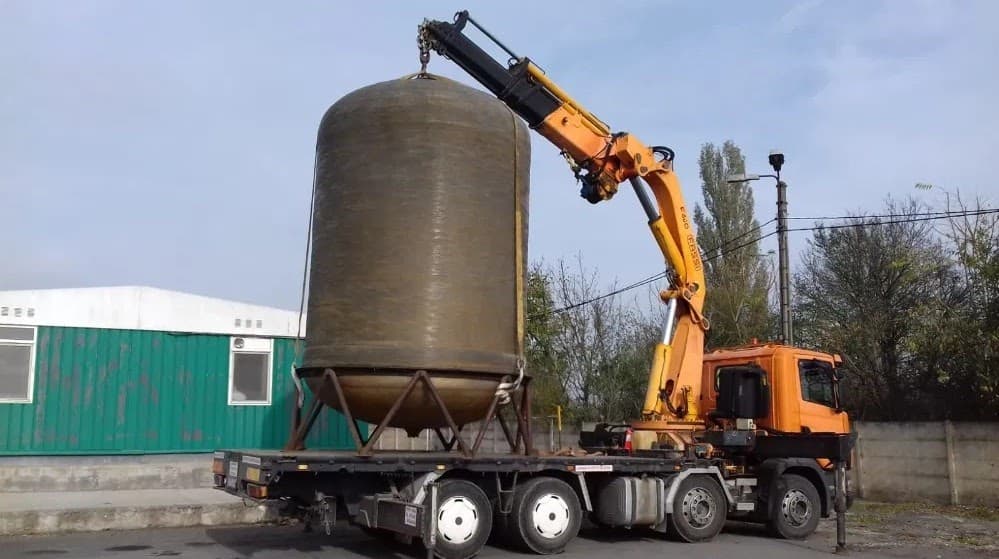
Truck-mounted crane
It combines transport and lifting in a single machine, which makes it highly efficient for installation, delivery and quick repositioning.
Best for
Containers, steel structures, machinery, building materials and jobs where speed of mobilization matters.
Watch out for
Check the space for the outriggers and whether the radius/height cover the final position of the load.
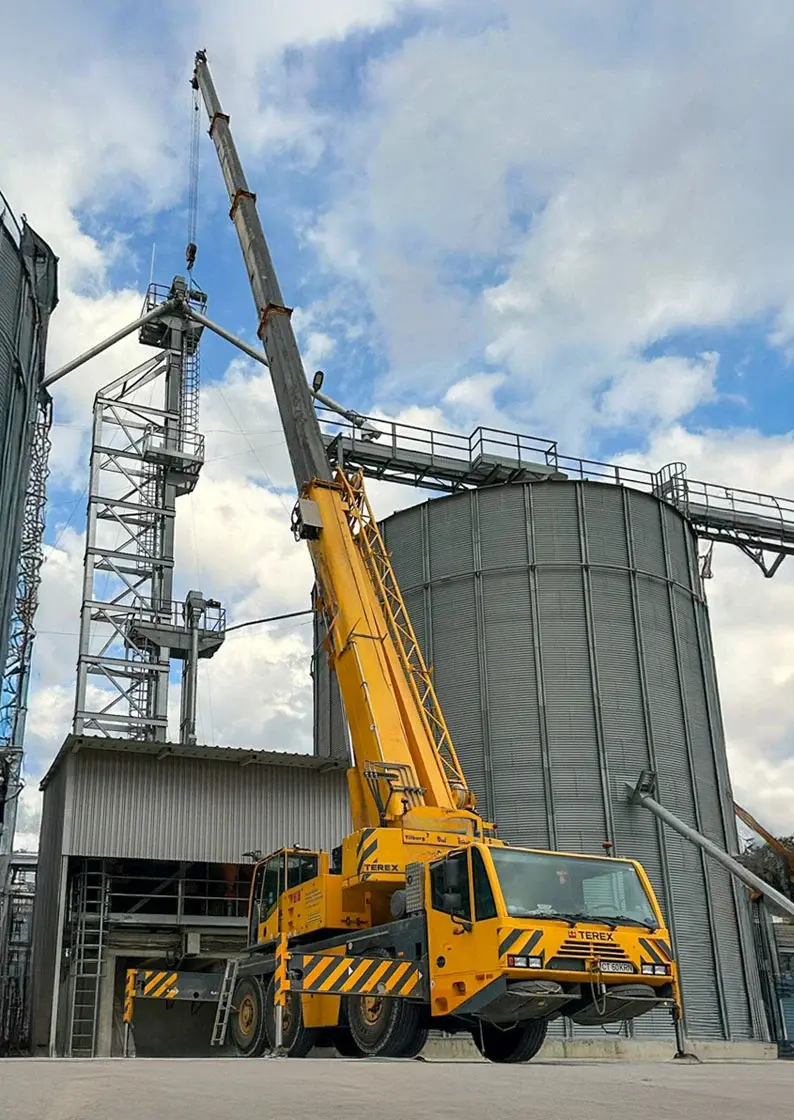
All-terrain crane
It is one of the most versatile solutions for industrial and construction projects where you need high capacity and a good working radius.
Best for
Lifting industrial equipment, heavy installation work, halls, precast elements and loads where a truck-mounted crane is no longer enough.
Watch out for
It requires an accurate assessment of the ground, the setup location and the working configuration to choose the correct capacity.
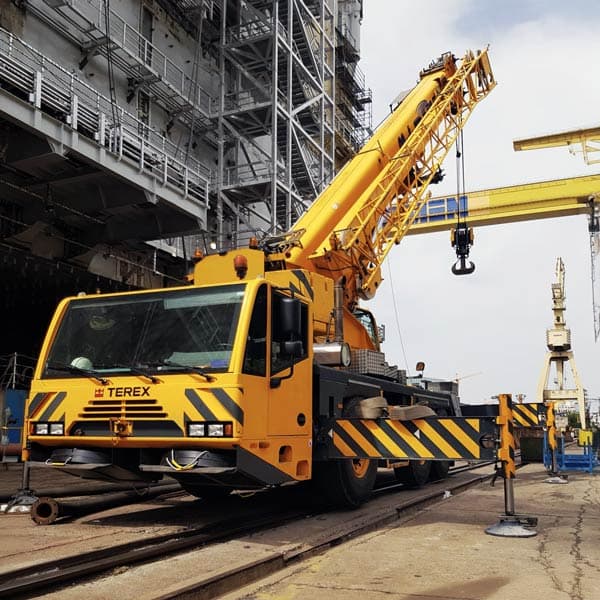
Telescopic crane
It uses an extendable boom and is valuable when you need flexibility and a quick response on site.
Best for
Quick interventions, infrastructure work and projects where the working radius has to be adjusted frequently.
Watch out for
Not every telescopic model is suitable for very heavy loads at long radii; the load chart remains decisive.
Rough-terrain crane
It is designed for difficult sites, with uneven access and surfaces that a classic road crane handles less easily.
Best for
Work on uneven ground, temporary access and areas where mobility on site matters more than travelling on public roads.
Watch out for
It may require separate transport to the work site and does not automatically replace a high-capacity all-terrain crane.
Crawler crane
It is a solution for heavy work and longer projects, especially when the ground doesn't support a wheeled crane well.
Best for
Heavy lifts, large sites, soft ground and projects where the machine stays on site for a long time.
Watch out for
Transport and mobilization are more complex, and the total cost has to be weighed against the duration of the job.
Spider crane
It is compact and very useful when access is restricted, including for certain indoor jobs or hard-to-reach areas.
Best for
Narrow yards, halls, atriums, installation work in tight spaces and special interventions.
Watch out for
Capacity and radius are more limited than on a classic all-terrain crane, so it should be used for the right scenario.
Fixed cranes
Solutions for long projects or industrial spaces
Tower crane
It is the type of crane most often associated with large urban sites and multi-storey buildings.
Best for
Tall buildings, a repetitive flow of materials and sites where the machine stays for the long term.
Watch out for
It requires a foundation, assembly, permitting and planning right from the site organization phase.
Self-erecting crane
A quicker-to-assemble option, suited to sites where a classic tower crane would be too much.
Best for
Medium-sized projects, areas with limited setup time and jobs where speed of commissioning is important.
Watch out for
It has stricter limits than a large tower crane in terms of height and capacity.
Overhead / bridge crane
It is mainly used in industrial halls, factories and technical spaces where lifting is done repeatedly along the same path.
Best for
Industrial processes, maintenance, workshops, production lines and internal handling.
Watch out for
It is not a mobile site solution; it works well only in a space prepared for this type of installation.
Level-luffing crane
It is used in dense or port areas, where the boom and the working space need finer control.
Best for
Crowded sites, ports and projects where the space taken up by the boom around it has to be limited.
Watch out for
It is a specialized solution and only makes sense when site constraints justify the choice.
Practical decision
What to choose depending on the project
Situation
You need to bring in and install elements in a single operation.
Recommendation
Truck-mounted crane
Why
You cut down the logistics and the number of machines involved, because the same platform can both transport and position the load.
Situation
You need to lift heavy equipment at a longer radius or greater height.
Recommendation
All-terrain crane
Why
You get more flexibility in the setup and a capacity better suited to industrial work or heavy installation.
Situation
You are working on uneven ground or with difficult access.
Recommendation
Rough-terrain or crawler crane
Why
These types handle complicated ground better and can stay stable where classic road cranes are limited.
Situation
You have a long-term urban site with a tall building.
Recommendation
Tower crane
Why
Long-term efficiency and the repetitive flow of materials justify setting up a fixed crane dedicated to the site.
Situation
You have a very narrow space, or even indoors.
Recommendation
Spider crane
Why
Its compact dimensions and positioning flexibility make it suitable for special interventions and limited access.
Have a project but aren't sure what type of crane you need?
Send the estimated weight, a few photos from the site and the final position of the load. In most cases, we can narrow down the choice very quickly.
There is no crane that's “good for everything”. There is only a crane that's right for the combination of weight, radius, ground, access and the duration of the job.
If your project is in Constanța or the surrounding areas, the best approach is to start from the real data of the lift. From our point of view, that means at least the weight, the pick-up point, the placement point, the space for outriggers and the duration of the operation.
In most cases, a few-minute conversation and a few photos from the site are enough for us to correctly narrow the choice down to the type of crane that makes sense.
See the crane service